
The Rare Disease Lifecycle: How to Listen, Launch, and Support Effectively
Building trust and delivering value across the entire rare disease drug lifecycle.
Building trust and delivering value across the entire rare disease drug lifecycle.
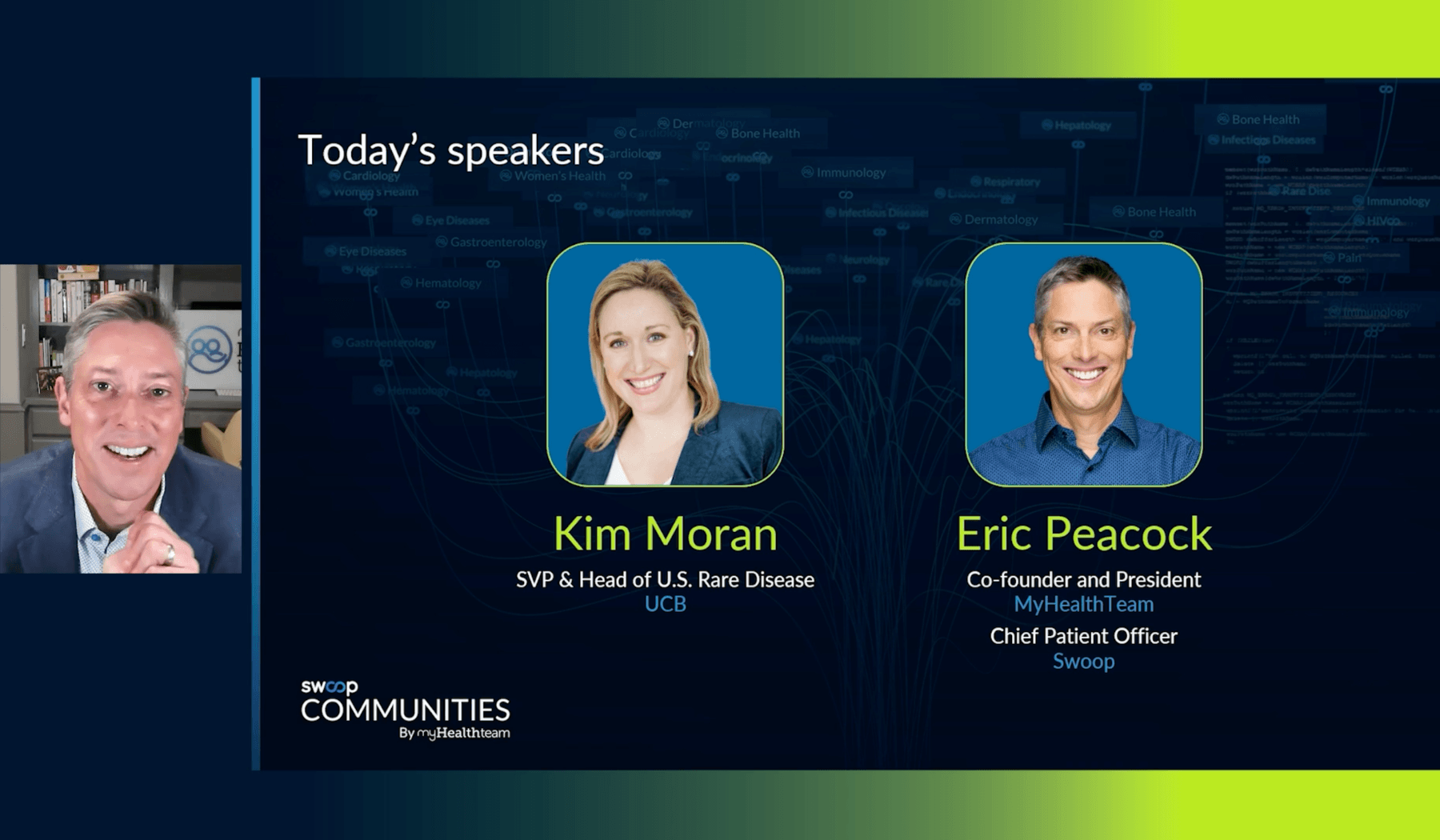
Rare disease commercialization requires a fundamental shift in strategy, moving away from “blockbuster” marketing toward a deeply personalized, patient-first model. In this webinar, Kim Moran of UCB and Eric Peacock of Swoop outline a “Listen, Launch, Support” blueprint designed to improve patient outcomes by ensuring they are understood and connected with the right treatments. “The patient is the North Star,” Eric said. “If you aren’t starting with their lived experience, you’ve already lost the plot of what rare disease marketing should be.”
Actionable Insights for Your Rare Disease Marketing Strategy
- The “Listen” Phase Starts Early and Never Stops: Successful rare disease strategies begin three to five years before a product reaches the clinic. Marketers must listen to patients early to understand the true “burden of disease” and identify unmet needs. Then it cotinues as materials are developed for patients over the lifecycle of the treatment.
- Authentic Advocacy is Key: Building trust with patient advocacy groups and online patient communities is essential. These organizations provide authentic insights necessary to create support programs that resonate with the community.With patients, UCB has been able to perfect campaigns and avoid costly creative missteps.
- Solve the Diagnostic Odyssey: Rare disease patients often spend years seeking a diagnosis, seeing multiple specialists along the way. Using high-definition data and AI to connect with these patients earlier can fundamentally change the trajectory of their lives. “If we can use data to shorten the time to diagnosis by even one year, we are providing an incredible service to that patient and the healthcare system,” Eric said.
- Measure What Matters to Patients: Success in rare disease is not just about prescriptions. It is about the “patient experience” and whether the treatment and support ecosystem are reducing the burden on the patient and their caregivers. “In rare disease, we aren’t just launching a drug; we are building an ecosystem of support that surrounds the patient and their family,” Kim said.
Ready to master the rare disease lifecycle and improve patient outcomes? Watch the full webinar to learn how a patient-first blueprint can help your brand listen, launch, and support more effectively.